Summary: Mediterranean shipwreck discoveries from Biblical times give evidence of advanced maritime trade and the oldest smelted iron blooms in ancient Israel.
But the LORD has taken you and brought you out of the iron furnace, out of Egypt, to be a people of his own inheritance, as you are this day. – Deuteronomy 4:20 (ESV)
A Remarkable Shipment of Raw Iron
Archaeologists diving off Israel’s Carmel Coast have made one of the most significant discoveries for understanding the ancient world. The shallow waters hid the remains of a shipwreck about 2650 years old, from the time of the final kings of the Biblical kingdom of Judah.
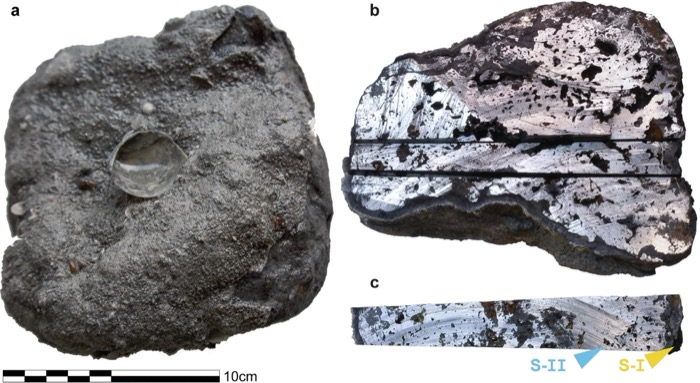
What looked like nine nondescript rocks encrusted with shells were actually heavy masses of iron, each about eight inches in diameter and weighing around 18 pounds that were brought to the surface. The well-preserved iron blooms are the first ever to be recovered complete with protective slag, and represent the oldest products of the iron industry to be securely dated. The findings challenge conventional thinking about the nature of iron production and trade in the world of the Bible.
Based on numerous previous finds of corroded iron billets and bars in Europe and the Mediterranean, it was assumed that finished or semi-finished iron or finished products were the preferred form of trade for iron in the ancient world. Blooms were rarely seen anywhere before the Roman period. So the researchers were quite surprised to find a shipment of half-processed iron blooms in the shipment. The significance of this find is bolstered by the recognition that only 11 shipwrecks from the Iron Age have previously been discovered in the Mediterranean.

The wreck was located in Tantura Lagoon at Tel Dor south of Haifa, Israel. The site is overshadowed by the slopes of Mount Carmel. Shipwrecks in the Lagoon began to be uncovered during underwater excavations in 2023-2024 season and the findings from the 7th century BC ship were published in the journal Heritage Science in March by a team headed by Prof. Tzilla Eshel from the University of Haifa. Archaeological news has slowed recently, as work around Israel has been postponed due to political conflict. However, examination and study of past excavations continues.
Iron and the Iron Age
Iron was not only a vital metal used for weapons and tools, such as plows, it is the namesake of an era. Scholars generally classify the periods that make most of Old Testament history into two “ages” or eras – the Bronze Age (typically assigned the dates of c. 3300 BC to c. 1200 BC), and the Iron Age (1200 BC – 550 BC). This covers the time from before Abraham to the Babylonian exile after the fall of Judah.
Besides questions regarding the accuracy of the dates assigned to the ancient world, it should be recognized that these ages are only convenient designations and only roughly based on use of iron and bronze. Iron was known to be used throughout the Bronze Age (though in much more limited ways), and a large majority of the metal used during the early phases of the Iron Age was still bronze.
Bronze is an alloy made of about 90% copper and 10% tin. Copper was common in the ancient world, but tin was quite rare. The largest known sources for tin at the time were in the far-flung areas of modern Afghanistan, Spain and the coasts of Britain.
During the earlier Bronze Age, iron was not typically used in large quantities because it was hard to work with, being nearly impossible to melt. Additionally, it was dull and rusted easily. In contrast, copper could be melted in a fire, allowing it to be poured into molds for the mass production of weapons and tools.
Most metals are found in forms known as “ores,” where other elements are bound or mixed with them. This requires smelting to separate the base metal. A special forge called a bloomery was developed that used charcoal to superheat the mill and cook away most of the impurities leaving a mass of iron called a bloom. The iron bloom was then relentlessly hammered while redhot until the molecular structure was realigned and carbon from the coal was forced into the structure of the metal. The prophet Isaiah describes this process that would be used for the next 2000+ years:
The ironsmith takes a cutting tool and works it over the coals. He fashions it with hammers and works it with his strong arm. He becomes hungry, and his strength fails; he drinks no water and is faint. – Isaiah 44:12

Iron that was worked in this way was somewhat lighter and stronger than bronze, allowing weapons to hold a better edge. But the real advantage was its widespread abundance, which didn’t need to rely on distant supply routes. The technology to better work iron spread and the Assyrians used it to economically equip their large armies that dominated their Iron Age neighbors.
A Change of Thinking
Since there had been a lack of Iron Age blooms previously discovered, scholars assumed that the blooms were beaten into bars or finished pieces by smiths immediately after smelting, while the metal was still red hot. After all, shipping the blooms would require reheating the iron to temperatures around 1200º Celsius to complete the process.
However, the find of the raw iron blooms tells a different story. The trade of iron was more sophisticated than thought. The fresh appearance of the bloom interiors indicates that the slag coatings acted to preserve the iron inside from corrosive elements such as salt water. The researchers propose that this was intentional and that the slag casing made a “shipping-ready” condition for long sea voyages where the cargo would often get wet from waves splashing over the deck.

Other finds in the wreckage included grape seeds and resin found in fragments of amphora jars, along with a charred oak twig embedded in the bloom’s slag. These were carbon dated to the 630s BC, give-or-take several decades. This turbulent time when the Assyrians and Egyptians were competing for dominance of the region and when Babylonia was on the rise. At this time, securing a resource like iron would have been strategically imperative.
The Phoenicians may also have acted as middle-men in the iron trade, selling to any interested party willing to pay for the freight.
The discovery shows that the smelting and smithing process could occur in two stages separated by hundreds of miles if needed and that blooms were traded as a commodity. The Mediterranean connected Israel to the trade routes of the Phoenicians and the great empires of the day.
Smithing centers could import blooms and remote mines could export them. The iron could be worked into tools and weapons wherever a smithy existed. Dor appeared to be such a site.

It is unknown who the ship bellowed to or whether it had just been loaded with the cargo or was just arriving with it. Whoever was meant for the shipment, the most urgent need at this time was the spearheads, arrowheads, and swords that iron would be worked into. Their demand would go unmet.
The authors of the study favor the idea that the Phoenicians were likely behind the transactions. In an earlier period, documents show that the Phoenician king of Tyre was granted trade and anchorage permission at Dor by the Assyrians, as part of a vassal treaty agreement. Large dumps of Phoenician commercial jars were found next to iron-smithy waste debris, at 7th-century BC levels.
Evidence for sea trade combining iron and commodities shipped in amphora jars (just as in the Dor wreck) is found in an Egyptian customs entry from the later Persian period. A Phoenician ship arrived in Egypt carrying Sidonian wine with two categories of iron.
The researchers hope to locate the origin of the iron to reconstruct the ship’s route. But the findings already overturn conventional thinking and open the door to seeing how the iron needed for weapons was traded across a complex and decentralized network, rather than being a tightly controlled imperial system.
The Spread of Iron Working and the Bible
Previously, most scholars had credited the ancient Hittites with inventing iron smithing during the Bronze Age, and keeping it a state secret for centuries. More recently, this view has fallen out of favor due to written records and the discovery of limited but widespread finds of smithed iron objects from central Europe through the eastern Mediterranean and Mesopotamia dating to the Bronze Age. The fact that iron tends to corrode (or rust) away over time makes these finds more significant, and they likely indicate a much larger usage of iron at that time. This fits the Bible’s mention of iron well before the Iron Age (1200 BC – 550 BC).
At the time of the exodus from Egypt (15th century BC), Moses wrote that the land of Canaan contained iron, and iron sources are known to be in the Galilee region, the Negev, and in Gilead and other areas of Transjordan. The bed of the king of Bashan (in the area of Gilead, east of Israel) was made of iron. The Israelites were also prohibited from using iron tools to build altars. The book of Job, which also seems to be set east of Israel and in the era before the exodus, mentions iron several times.
a land in which you will eat bread without scarcity, in which you will lack nothing, a land whose stones are iron, and out of whose hills you can dig copper. – Deuteronomy 8:9
(For only Og the king of Bashan was left of the remnant of the Rephaim. Behold, his bed was a bed of iron. Is it not in Rabbah of the Ammonites? Nine cubits was its length, and four cubits its breadth, according to the common cubit.) – Deuteronomy 3:11
And there you shall build an altar to the LORD your God, an altar of stones. You shall wield no iron tool on them; – Deuteronomy 27:5
He will flee from an iron weapon; a bronze arrow will strike him through. – Job 20:24

During the conquest of the Promised Land, the Israelites faced Canaanite forces in the plains that were armed with the formidable weapons of what are called “chariots of iron.” Exactly what is meant by this term is uncertain, since war chariots of solid iron would be too heavy to be effective. No evidence of iron chariots from this period have yet been found, but based on the Bible’s track record, it would not be shocking if the remains of chariots with some kind of iron components or equipped with iron weaponry were discovered in the future.
The people of Joseph said, “The hill country is not enough for us. Yet all the Canaanites who dwell in the plain have chariots of iron, both those in Beth-shean and its villages and those in the Valley of Jezreel.” – Joshua 17:16
In the days of Israel’s King Saul (11th century BC), the Philistines along the seacoast appear to have had the ability to work with iron while the Israelites in the hill country did not. The Philistines may have had to import their iron (perhaps from Cyprus), since evidence of iron production has not been found in this area from that time period.
Now there was no blacksmith to be found throughout all the land of Israel, for the Philistines said, “Lest the Hebrews make themselves swords or spears.” But every one of the Israelites went down to the Philistines to sharpen his plowshare, his mattock, his axe, or his sickle, and the charge was two-thirds of a shekel for the plowshares and for the mattocks, and a third of a shekel for sharpening the axes and for setting the goads. So on the day of the battle there was neither sword nor spear found in the hand of any of the people with Saul and Jonathan, but Saul and Jonathan his son had them. – 1 Samuel 13:19-22
The number of iron item discoveries in Israel increases greatly after the 10th century BC.
Conclusion
The Dor iron bloom discovery is exceptional in many ways. This oldest ever assembly of securely dated blooms pulled from the seabed provides a window into Iron Age metallurgy and trade that overturns previous thinking. It demonstrates that smelted iron was a commodity transported in a way that allowed smithing into tools and weapons in urban centers far from the iron’s source.
This flexible and interconnected marketplace put Biblical Israel at the center of a sophisticated, international power struggle that would lead to its demise. They trusted in chariots and horses – and iron, instead of trusting in the name of the LORD their God. Keep thinking!
TOP PHOTO: a: the encrusted bloom as recovered. b: a cross-section extracted from one iron bloom core using a metallographic cutting machine. c: the locations of metallographic samples within the cross section. (credit: Eshel, T.,et al. , 2026, npj Heritage Science – ISSN 3059-3220 (online) – open access)


