Summary: What role did prophets play in the Bible, and how was it determined who was a true one? An interview with Brian Rickett and Tim Mahoney helps find answers.
And if thou say in thine heart, How shall we know the word which the LORD hath not spoken? When a prophet speaketh in the name of the LORD, if the thing follow not, nor come to pass, that is the thing which the LORD hath not spoken, but the prophet hath spoken it presumptuously: thou shalt not be afraid of him. – Deuteronomy 18:21-22 (KJV)
Prophets in Israel’s History
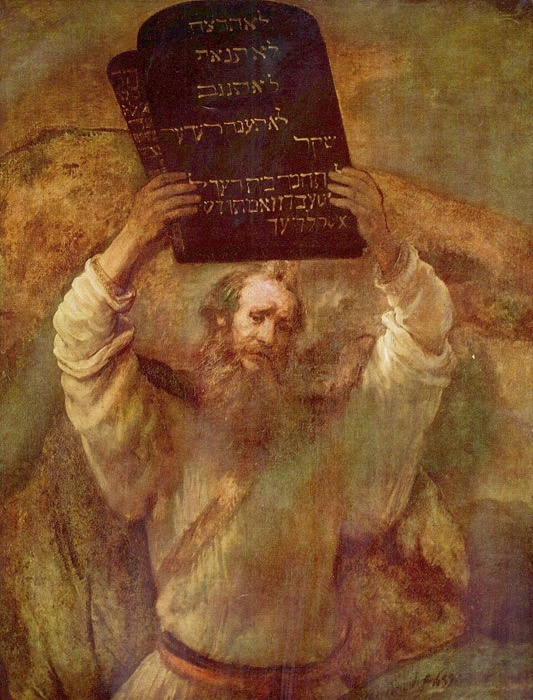
The Prophets of the Bible are somewhat mysterious. Moses was the first great prophet of the people of Israel, who talked with God at Mount Sinai. A string of prophets would follow, speaking to the people until the fall of the kingdoms of Israel and Judah, and even beyond, while writing most of the books of the Old Testament. Several of these prophets show up often in reenactments for our Israel Dilemma films.
But what did prophets do and how could the people test their authenticity to determine whether they had authority or not? The following 2-part series will take excerpts from an interview with Professor Brian Rickett and Tim Mahoney to gain valuable insights into these questions.
The Purpose of a Prophet
TIM MAHONEY (T.M.): Isaiah the prophet says that God’s going to tell people what’s going to happen before it happens. Multiple times he says this. The Bible is filled with these prophecies. They’re intriguing to me. Okay, so first off, what is a prophet?
BRIAN RICKETT (B.R.): In the Old Testament, there were three Hebrew terms for that. The first one was nabi, and that word refers to a mouthpiece. When a prophet was designated as a nabi, that means he was standing in the role of a mouthpiece. He was speaking forth for God.
T.M.: Mm-hmm (affirmative).
B.R.: Another word designated to the prophet was hozeh. That refers to one who sees, it’s like a seer. Sometimes you probably remember, the prophet was on occasion referred to as a seer. It probably has to do with vision or a dream. A third, is the term roeh. That also means seer. Those are the three primary terms for a prophet in the Old Testament.
T.M.: Does it mean he was seeing things into the future?
B.R.: It doesn’t necessarily have to be the future. Seeing things in advance was only one of the many things a prophet did. Sometimes he would “see” in the sense that The Lord would show him vision, in the sense of something like a story, or the Lord is introducing him to something. Like he says, what is it you see? I see grapes. That sort of thing. So The Lord uses object lessons in the course of a vision. To teach him something.
T.M.: Mm-hmm (affirmative).
B.R.: So those would be the key three terms for a prophet. These guys were recognized authorities in Israel and they were the means via which God would communicate truth to His people.
So a key passage to sort of distinguish that in reference to Moses would be Deuteronomy 18. Here’s what that passage says in reference to Moses. Moses, speaking to the covenant community about the future says, 18:15, Deuteronomy, ” The Lord your God, will raise up for you a prophet, like me from among you, from your countrymen, you shall listen to him.” Okay.
If you have a guy who is raised up, or claims to be raised up, within the covenant community and says, “Thus says The Lord,” that’s the common phrase in the Hebrew Old Testament. “Thus says The Lord.” If a guy stands up and says that, you’ve got a couple of options. One, you believe him and then you got to do what he says. Two, you don’t believe him and you’re not going to do what he says. Or three, you’re not sure. If you have a guy who is claiming to speak authoritatively to the covenant community on behalf of God, you better know for sure that he in fact is authentic and that you can trust him.
The Old Testament gives about nine criteria that that prophet must meet in order for him to be authentic.
T.M.: Mm-hmm (affirmative). So they had probably an issue at one time with people that were saying certain things.
B.R.: Yeah.
T.M.: And they came up with some criteria.
B.R.: So, the test and criteria itself are given by an established prophet. That’s key. So Moses says, “The Lord your God will raise up for you a prophet like me.” And so-
T.M.: A prophet like him, was that sort of generic or was that specific? In other words, was Moses relating that there would be other prophets throughout the years? Or a specific prophet?
B.R.: That had both a near and far fulfillment.
T.M.: Okay.
B.R.: The near fulfillment would be his successors – like Joshua. A far fulfillment, this would be in reference to Christ. So when he says in John 5 that the religious leaders could look to Moses to learn of Christ, in that sense, that was a way that that could have happened.
T.M.: Okay, when Christ said that to the religious leaders, he was referencing that he was the prophet that Moses was talking about.
B.R.: Yes, mm-hmm (affirmative).

T.M.: Okay, so the test of a true prophet.
B.R.: You got about nine of them. Nine tests. Nine ways you can tell if a guy is authentic or not. Because there’s always some guy that rises up from within the community and claims to be somebody special. He wants people to listen to him. In the case of cults, you have cult leaders who rise up and they make audacious claims about themselves and they manipulate people.
T.M.: Mm-hmm (affirmative).
B.R.: So in order for the covenant community to know if they were dealing with one who’s authentic, or with one who is an imposter, they had to have a way to verify, authenticate, objectify that claim. The Torah gives many of them and the Old Testament taken together, gives about nine. And Moses met all these criteria.
TEST 1) Could Only Speak in the Name of YHWH
B.R.: One of them would be that a true prophet could speak only in the name of YHWH (Yahweh – the personal covenantal name of the God of the Bible), as opposed to the name of one of the gods from the polytheistic religions in the communities around them. He couldn’t speak in the name of Baal and the name of YHWH. In the case of Balaam, Balaam was a false prophet who did not speak exclusively for YHWH. But in at least one scenario, he did. He made that attempt.
T.M.: So some prophets were speaking for many different gods, and Moses, in this test here, was saying that it had to be one who only spoke in the name of YHWH.
B.R.: Or another example could be in Jonah Chapter One. All the sailors on the ship, they’re Phoenicians, and they’re each calling out to his own god. Because they don’t know if the reason the storm has come is because of Yam, the sea god, Dagon, who could have been a fish god or a grain god, either one. It could of been a god associated with the weather in some way. Each sailor is calling out to his god, and remember the captain, the chief sailor, goes to Jonah and he says, “What are you doing? Get up. Call out to your god. Perhaps he will have mercy on us, that we not perish.”
That captain, in that moment, is appealing to all of the gods on that ship. We don’t know which god is offended, so you get up and call out to yours. That’s what’s happening, that’s a polytheistic system. All of the systems around Israel were polytheistic in that they believed in many gods that were connected to topographical or ethnic people groups, so they were localized.
T.M.: In other words, different people in different communities had different gods and so poly means “many” and “theistic” means god, right?
B.R.: Right, so “theos” is Greek for god.
T.M.: They would have a sky god or a moon god or a sun god.
B.R.: Yeah, that sort of thing.
T.M.: Okay. So the first test is you can only speak in the name of YHWH. That would also mean Elohim, or all the names attributed to God right?
B.R.: Yeah, exactly.
T.M.: Okay.
B.R.: My wife might say that she’s married to Brian. She might say that she’s married to R. Brian, cause that’s my first initial. She has some other names for me too. Anyone of those would be fine. We all know who she’s talking about.
By the way, the case with Jonah on that boat, when he says to the sailors they ask what people are you from. They ask him a number of questions, what is your occupation, etc. He says, “I am a Hebrew.” And then he says, “And YHWH, the God of the heavens, I serve, who made the sea and dry land.” So what he says there is that this is the ultimate God who is the creator of the stuff. Rather than having evolved out of the stuff, which is what the Polytheistic religions believed, that matter is eternal, and the gods evolved out of the stuff.
But Jonah is saying, “I’m a Hebrew, I serve the God of the heavens who made the stuff, and the sea and the dry land.” So connecting him to sea, land, and sky, connects to all of the cosmology of the ancient world. They naturally were greatly afraid.
T.M.: Yeah, they probably hadn’t even conceived of a God that was like that before.
B.R.: Maybe not, except that they probably knew of his reputation. That would be Deuteronomy 13:1-5. Here’s what that passage says, just to give you an idea. This passage says, “If a prophet …,” that’s nabi, “Or a dreamer of dreams arises among you and gives you a sign or wonder, and the sign or the wonder comes true, concerning which he spoke to you saying, let us go after other gods, whom you have not known and let us serve them. You shall not listen to the words of that prophet, or that dreamer of dreamers, for The Lord your God is testing you to find out if you love The Lord your God with all your heart and with all your soul.”
Here Moses says, this is a way of authenticating the legitimacy to your commitment to YHWH God. Are you going to serve him? Or are you not? You may, on occasion, have someone who says to you, “let’s go after other gods”, that guy, don’t listen to him. Okay, there’s a penalty for that guy.
T.M. Mm-hmm (affirmative).
B.R.: If you ever have a guy who says, “Let’s go after Baal. Let’s go after Dagon. Let’s go after one of those guys.”
T.M.: Those are local Palestine gods?
B.R.: Those are gods in the area. Chemosh was god of the Moabites, for example, and so they each had their own localized gods and they went by many names. If you have somebody from Israel who rises up and says that. This is the passage, “That prophet or that dreamer of dreams shall be put to death.” So we have a capital offense if you claimed to be a prophet, and you try to get Israel to go after some other god. So this is a pretty serious deal. You counsel rebellion against YHWH God, the test, are you uniquely loyal to him, or are you not? You fail the test, the penalty is death, so it’s a pretty serious thing.
T.M.: Mm-hmm (affirmative). Okay, so that’s the first test, what’s the next one?

TEST 2) Could Only Speak by Divine Inspiration
B.R.: Another test was that the authentic prophet could only speak by revelation or inspiration. That means that he could not utilize the methods of the false prophets around him, that would be the use of divination, spiritism, reading the signs, looking at the stars, all that kind of stuff. All that was off limits. By the way, people that do that sort of stuff, they are trying to get information that they have no right to gain.
T.M.: Mm-hmm (affirmative).
B.R.: So they are trying to manipulate whatever the spiritual forces are. They think that they can access them to get something from them.
T.M.: So the second stipulation was that the revelation had to come directly from God. Not from some type of divination.
B.R. Exactly.
T.M.: No spiritism.
B.R.: Right. When you try to get something that doesn’t belong to you, you’re using God as a means to an end.
T.M.: Mm-hmm (affirmative).
B.R.: The prophet was utilized by God to warn and advise the people. So the Biblical prophet was not trying to gain something from the people, but trying to give the people something for their good.
B.R.: An example of this would be Deuteronomy 18:9-14 … ” When you enter the land in which The Lord your God gives you, you shall not learn to imitate the detestable things of those nations. There shall not be found among you anyone who makes his son or his daughter pass through the fire.” Because in service to these other gods, in an effort to try and manipulate them, the pagan people surrounding them would offer their children as sacrifices. That was off limits. If you notice with Hebrew religion, the drive is towards purity.
T.M.: Mm-hmm (affirmative).
B.R.: The drive is towards a high view of man, a high view of God; towards morality, righteousness, ethics, and that sort of thing. Lying is off limits. Adultery is off limits. All the kinds of things that we sort of have a sense in our conscience are immoral, many of those things are prescribed in the law of God. In Micah 6:8, it says, “What does God require of you of man? But to love justice, to do mercy, and to walk humbly with your God.” There you have an aspect of Hebrew morality.
TEST 3) Personal Moral Character
T.M.: Okay well what’s another test of a prophet?
B.R.: A third test, given Scripturally for an authentic prophet. For a prophet to be an actual God-called individual, he could be identified by the testimony of his own moral character. For example, false prophets were characterized by low morality. If you offered to give them something, they would give you a prophecy in your favor.
T.M.: I see something in your notes there. It says “Three G’s.”.
B.R.: Yeah. So I wrote in my notes “three G’s.” The false prophet was motivated by gold. He wanted something financial. Glory, he wanted to gain something in terms of prominence. Or girls, he was sexually immoral.
By the way, these principles are not original with me. Gleason Archer was the primary source of these ideas, at least in a systematized form. I’ve added to them over the years. These are things that make the Bible unique. You have about nine tests for an Old Testament prophet given in the Torah itself for what an Old Testament prophet was supposed to do and be.
Conclusion
There are six more tests to go. Next time we will explore test numbers 4-9 for how to determine a true prophet from the false, and who had the authority to speak for God. Until then, keep thinking!
TOP PHOTO: Moses Smashing the Tablets of the Law. (Rembrandt (1606-1669), public domain, via Wikimedia Commons)


